
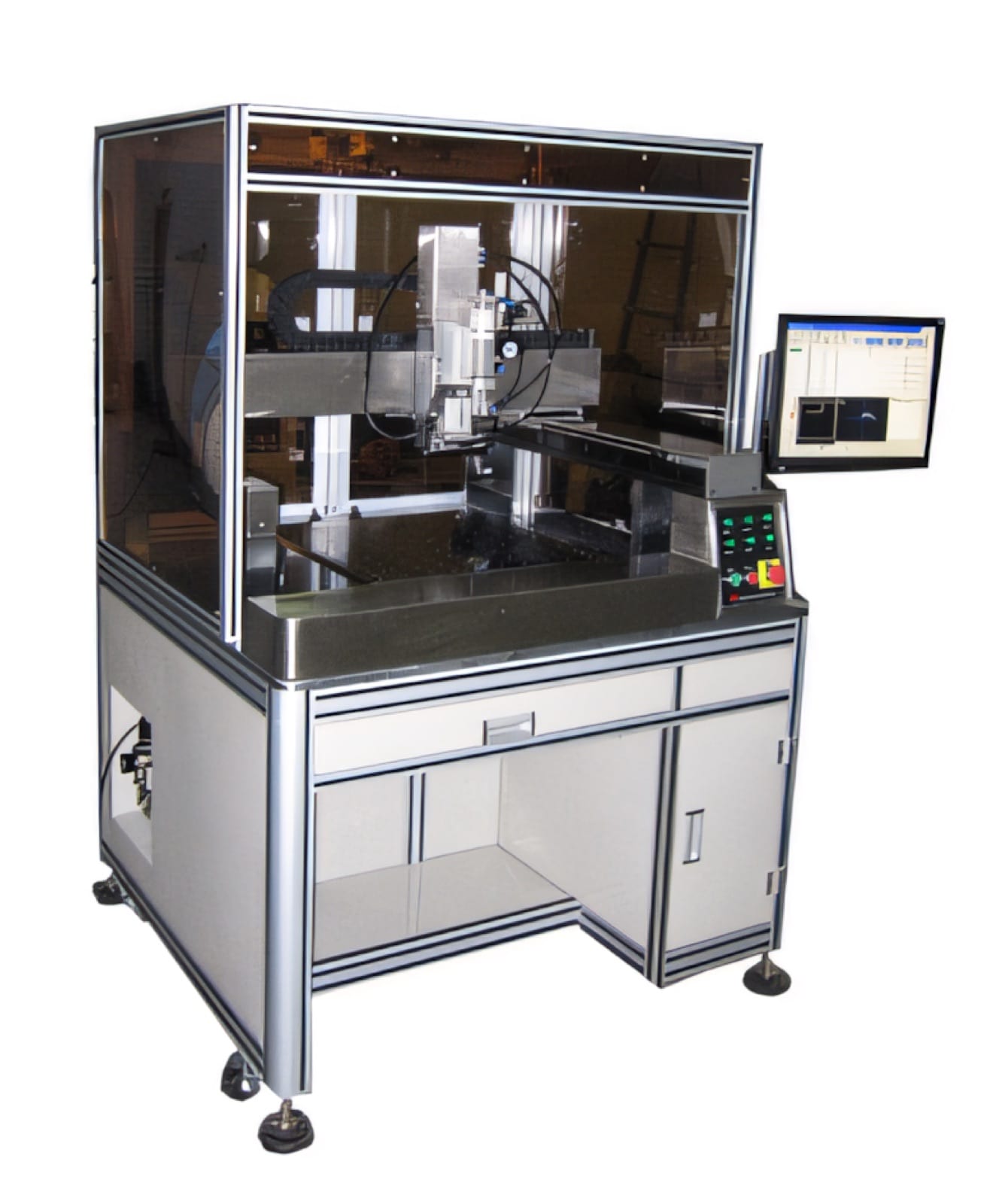
Separate electrical function from mechanical bonding
Conductive glue is selected when the cured deposit must carry an electrical or thermal function as well as create a bond. AB epoxy describes a two-component material system in which resin and hardener are metered and mixed before cure. Some two-component formulations may be conductive, but the process requirement should come from the approved material rather than the label alone.
Define the joint first: substrate materials, required resistance, bond area, mechanical load, operating temperature and environmental exposure. Then confirm that the material has been qualified for that application. A dispensing machine reproduces the chosen deposit; it does not make an unsuitable chemistry fit the product.
Control the conductive-glue deposit
Conductive adhesives may contain particles that influence viscosity, settling, valve wear and minimum practical tip size. The path must connect the intended features without spreading into adjacent conductors. For cylindrical parts, a controlled rotary axis can maintain a consistent bead around the component.
Track material conditioning and time out of storage because viscosity changes alter flow. Confirm start and stop behaviour, bead continuity and cured resistance at the required points. Visual inspection alone cannot prove electrical performance.
Control ratio and working life for AB epoxy
A two-component process must deliver the specified mix ratio and enough mixing energy to create a uniform material without introducing excessive air. Metering errors can leave soft, brittle or incompletely cured regions even when the bead shape looks correct.
Pot life creates a production clock after mixing. Define purge frequency, pause handling and restart rules so material that has advanced too far in cure cannot reach the product. Cleaning effort, disposable mixer use and waste should be included in the cycle and operating cost.
- Target mix ratio and allowed tolerance
- Working life at production temperature
- Purge, pause and restart method
- Cure verification and traceability
Choose the machine from the material trial
Run real components with production material and observe the complete window from startup to the end of working life. Measure deposit weight or dimensions, path accuracy, voids, cure and the finished functional test. Include refilling and a planned stop because these transitions often reveal process weakness.
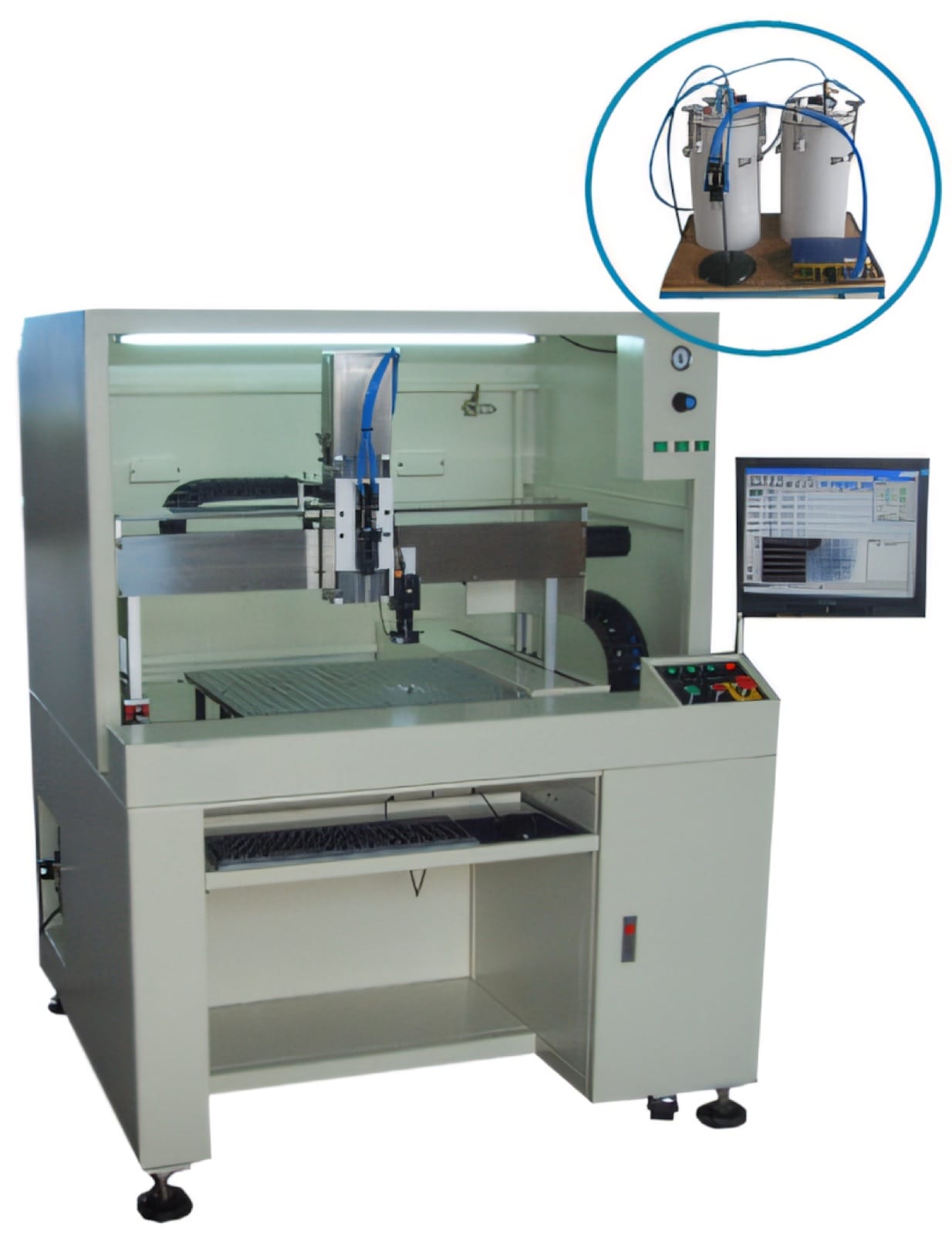
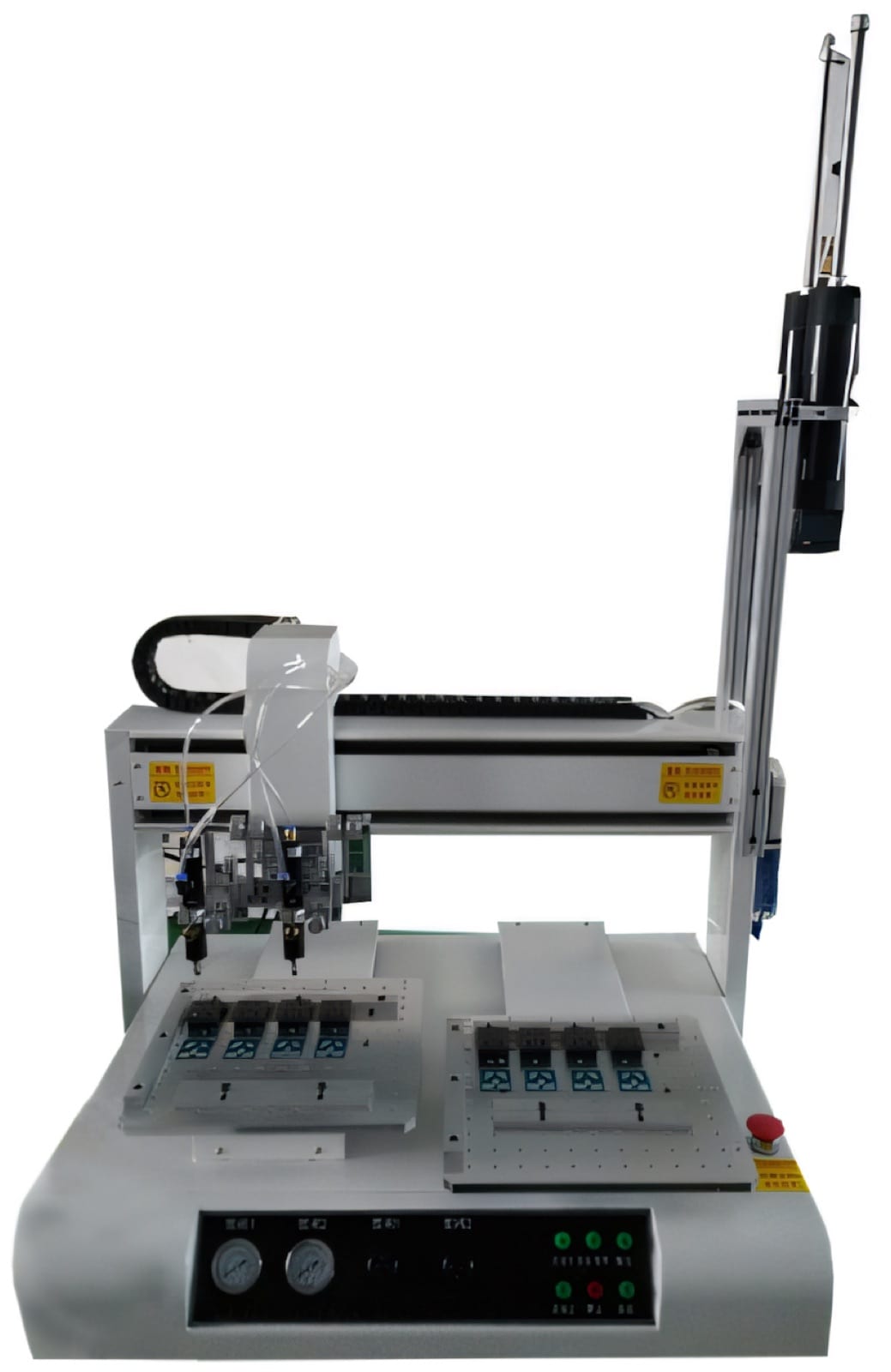
PME offers rotary-axis conductive-glue dispensing, AB glue metering and compact or dual-syringe platforms. The final architecture should match material packaging, viscosity, deposit geometry, cure plan and the factory’s maintenance capability.
Relevant machinery for this process
Explore PME equipment that can support the operations discussed in this guide. Final machine selection should be confirmed against your component, materials and target output.
Plan the next step
Discuss your component and production target with PME.
Share a drawing, sample, current process and expected output. We can help map the right machines and level of integration.