
Characterize the material before choosing equipment
An automatic liquid dispensing machine must match viscosity, filler content, pot life, cure mechanism, storage condition and sensitivity to air. Adhesive, resin, conductive glue and two-component epoxy can require very different pumps, valves, syringes and cleaning routines.
Test material at realistic production temperature and after normal storage time. A dispensing process that works with a fresh laboratory sample may drift as viscosity changes during a shift.
Specify the deposit, not only the volume
Define dose weight or volume, bead width, path, start and stop points, height, edge clearance and allowable voids. Component location and surface condition affect how the material flows after dispensing.
For potting or encapsulation, confirm fill behaviour around windings, terminals and cavities. For conductive glue, control path accuracy and avoid stringing or contamination between electrical features.
- Material data sheet and approved batch range
- Deposit tolerance and inspection method
- Single- or two-component mixing ratio
- Cleaning, purge and changeover procedure
Choose the motion and delivery architecture
A compact syringe-based industrial glue dispensing machine can support varied parts and lower volumes. Dual-syringe platforms reduce interruptions or handle two materials. Rotary-axis systems can follow cylindrical components, while AB equipment meters and mixes two-component materials.
Feeding and fixturing should locate the part without blocking the dispensing path. If automatic loading is planned, include part-present checks and a safe reject path for incomplete deposits.
Validate dose, cure and maintenance
Measure deposits over a meaningful run, including startup, material replenishment and the end of pot life. Confirm cured performance with the customer’s electrical, mechanical or environmental test—not appearance alone.
PME offers compact, dual-syringe, rotary-axis, COB and AB glue dispensing systems. A material and sample trial is the best way to establish valve choice, cycle, cleaning needs and repeatability.
Relevant machinery for this process
Explore PME equipment that can support the operations discussed in this guide. Final machine selection should be confirmed against your component, materials and target output.
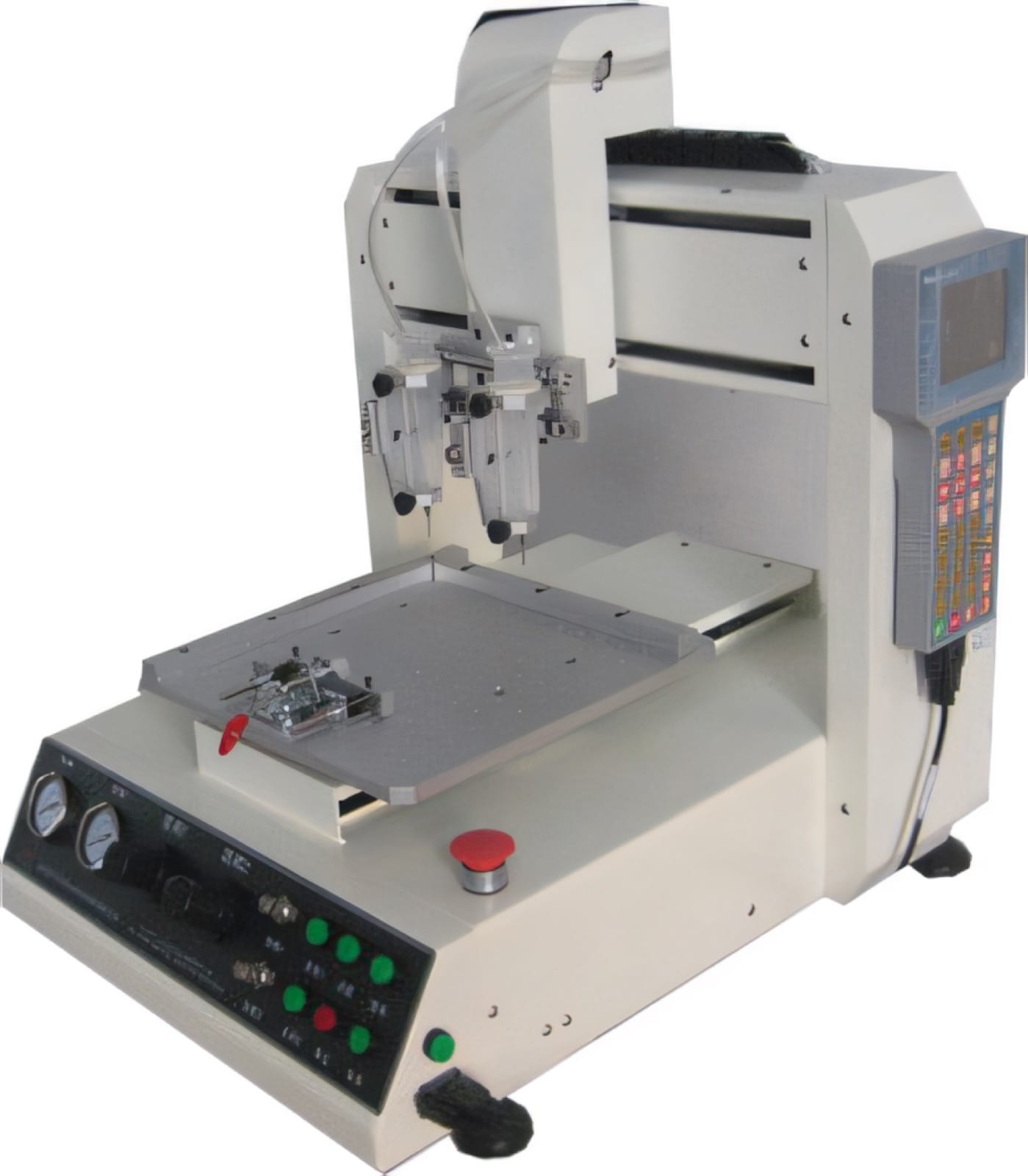 PME AUTOMATION
Compact Auto Liquid Dispensing Machine
View machine ↗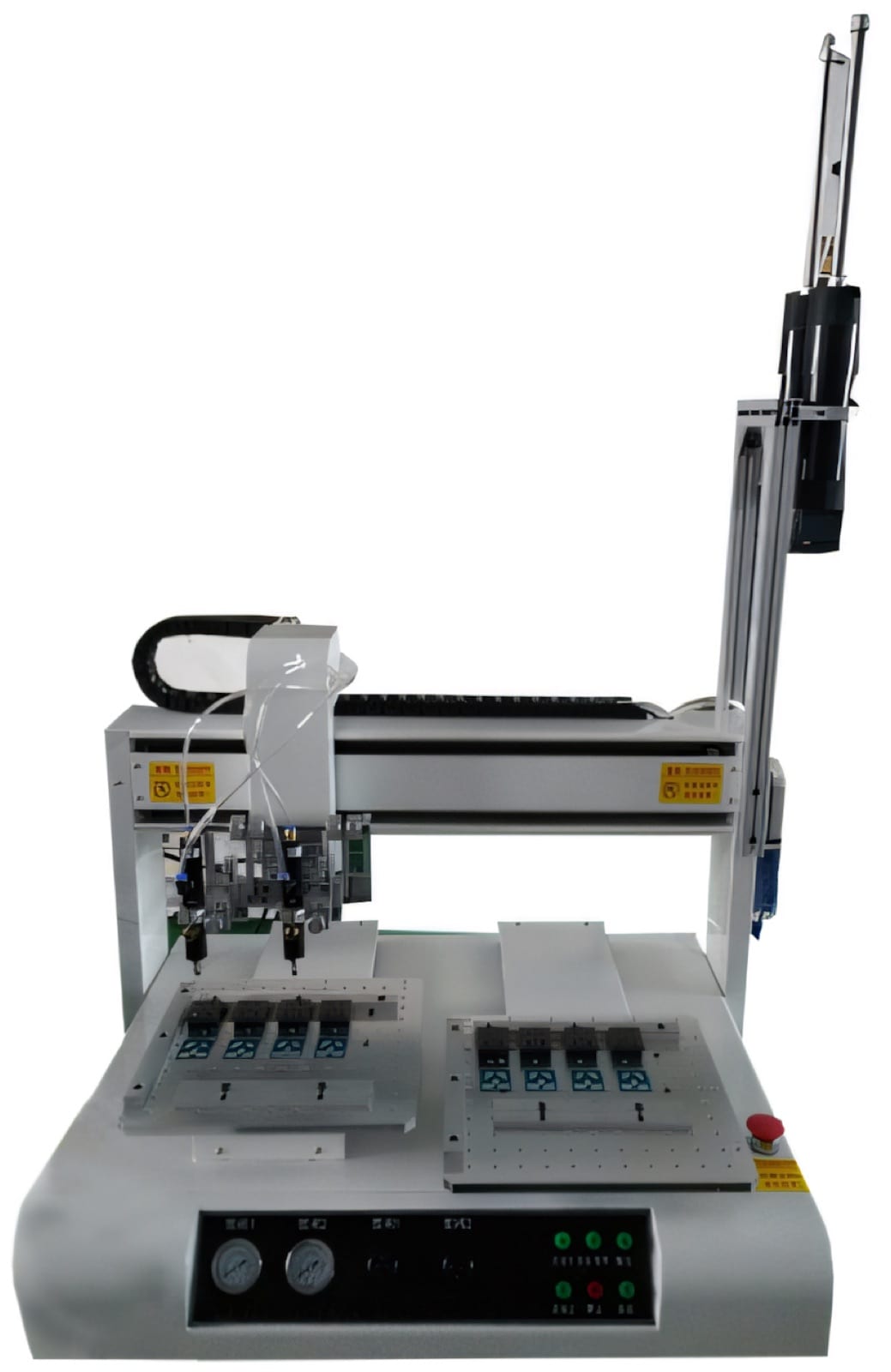 PME AUTOMATION
Auto Liquid Dispensing Machine — Single/Dual Syringe & Slide Platform
View machine ↗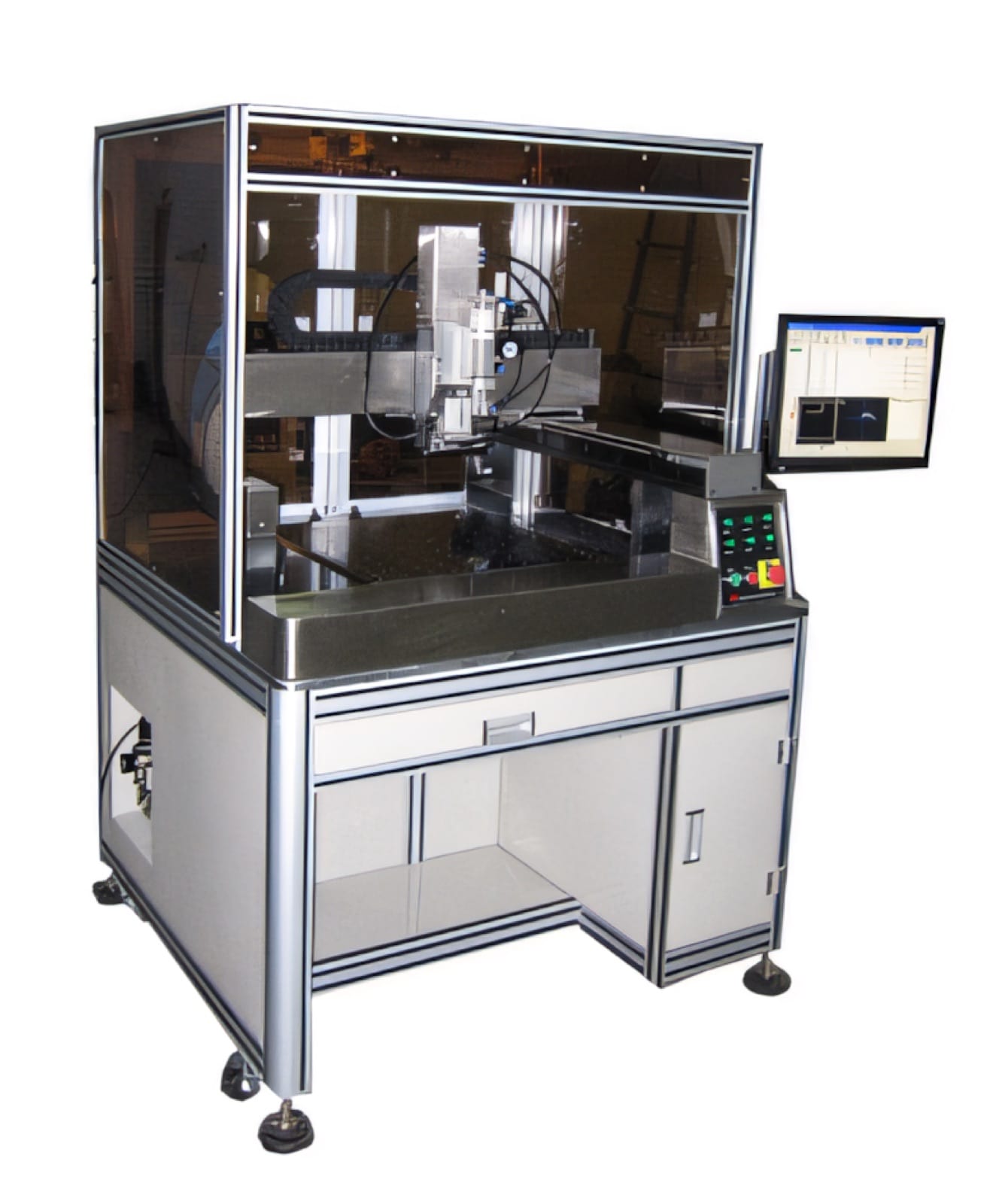 PME AUTOMATION
Auto Conductive Glue Dispensing Machine with Rotary Axis
View machine ↗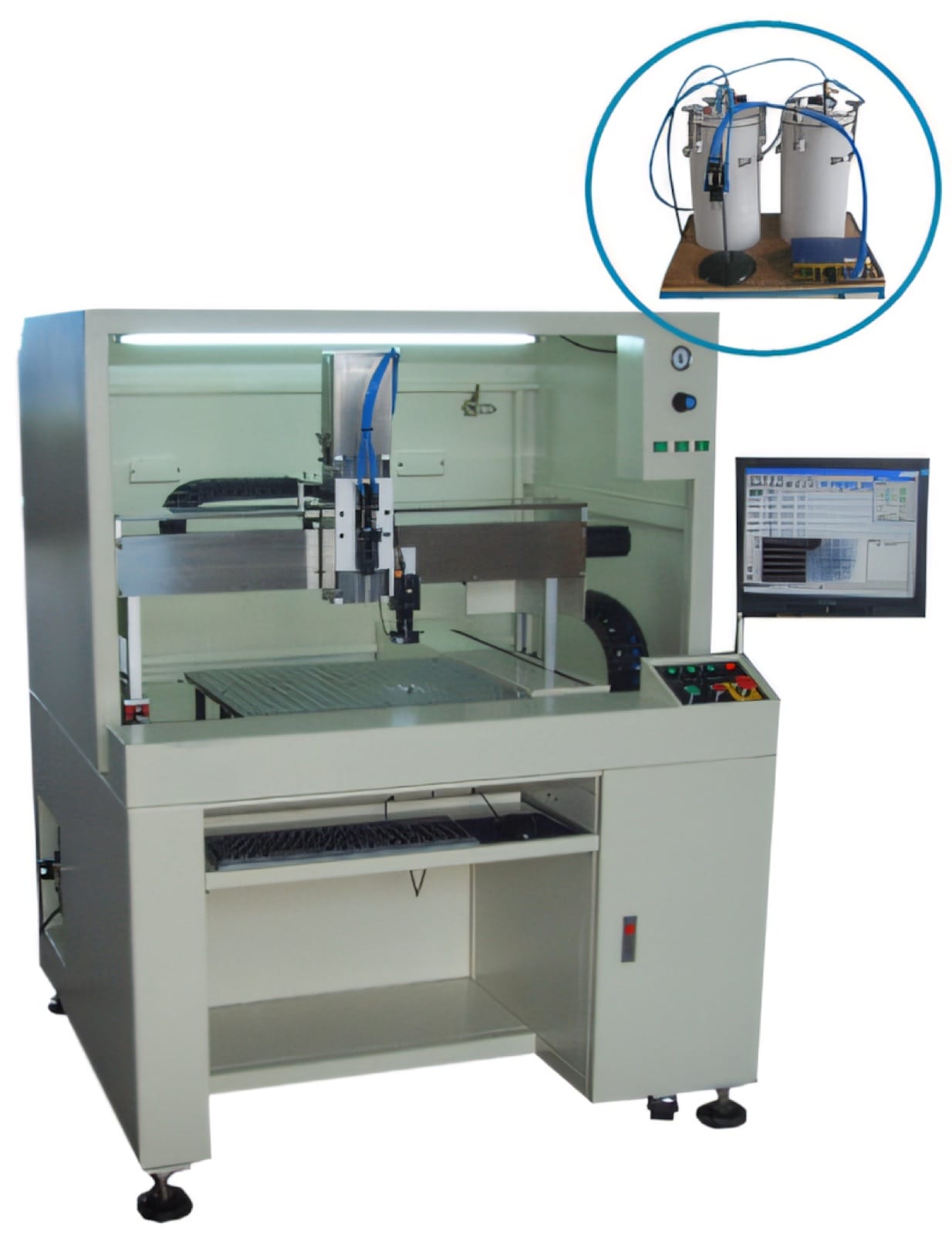 PME AUTOMATION
Auto AB Glue Dispensing Machine
View machine ↗Plan the next step
Discuss your component and production target with PME.
Share a drawing, sample, current process and expected output. We can help map the right machines and level of integration.